

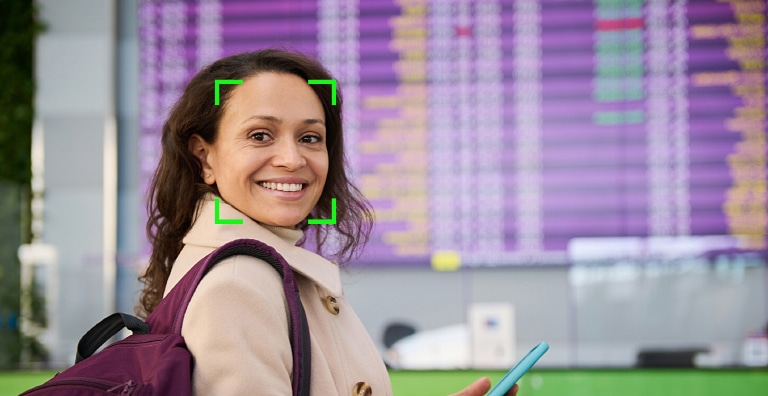
HID has released a new blog on its website, detailing how airports today are no longer just places travellers pass through — slowly and frustratingly. They are evolving into intelligent, adaptive ecosystems. The goal? To make every step of the journey faster, safer and more seamless.
With rising passenger volumes and mounting cost pressures, airport leaders face a tough mandate: deliver secure, seamless and sustainable experiences while improving efficiency.
The solution? Strategic digital modernisation — and at the core of it is facial recognition.
What the Smart Airports report reveals
The new interactive Smart Airports: From Curb to Runway eReport from International Airport Review offers a behind-the-scenes look at how six global hubs are reinventing the passenger experience. It’s packed with insights from industry experts and decision-makers who are making digital transformation real.
According to the report, these are the top priorities for smart airports:
- Frictionless Identity and Biometrics — The ultimate goal is a seamless, touchless journey. Airports use biometric checkpoints to cut queue times by up to 40%, enabling fast, secure ID verification without the need to show documents at every turn.
- AI-Driven Decision-Making — AI is turning raw data into predictive intelligence, allowing airports to forecast passenger flow, manage capacity and optimise staffing. This enables airports to maximize existing resources and avoid costly infrastructure expansions.
- Automation and Personalization — From automated baggage handling to self-service checkpoints, smart airports are freeing up staff for higher-value tasks and enhancing satisfaction across all stakeholders throughout the terminal
This report confirms that digital transformation is no longer optional. It’s the competitive edge airports need to overcome key pain points, such as data silos, staff shortages and passenger friction.

From Vision to Reality: What it takes to modernise
While the smart airport report lays out the vision, the real work happens on the ground — integrating new technologies, managing resistance to change and ensuring stakeholder alignment. And with the EU Entry/Exit System (EES) deadline on the horizon, airports are under immense pressure to accelerate modernisation.
To address these hurdles head-on, HID recently hosted a virtual panel discussion, From Curb to Gate: Rethinking Identity in the Airport Journey. This session brought together senior airport executives, digital transformation leaders and HID’s aviation biometric specialist, Robert Sutton, to explore what it really takes to implement biometric systems at scale.
The informative panel explored how leading airports are turning the vision of a friction-free passenger journey into a tangible reality, including:
- Why the industry is at the tipping point for full-scale biometric adoption
- Real-world use cases where facial recognition improves speed, accuracy and security
- Practical lessons learned from deployments — focusing on stakeholder buy-in and seamless integration with legacy IT systems
Facial recognition solutions that succeed in aviation are built on three pillars: accuracy, security and privacy and operational advantages. This panel wasn’t just a theoretical discussion. It provided actionable, front-line insights for anyone involved in shaping the future of passenger experience.
Watch the webinar now
Ready to start enabling smooth passenger flow?
Facial recognition is no longer emerging. It’s proven, and it’s ready to elevate airport operations and passenger experiences to new heights. Want to see how facial recognition can work for your organization? Let’s connect. HID’s experts are here to help bring your vision to life.
Read the blog on the website, here
For more HID news, click here