
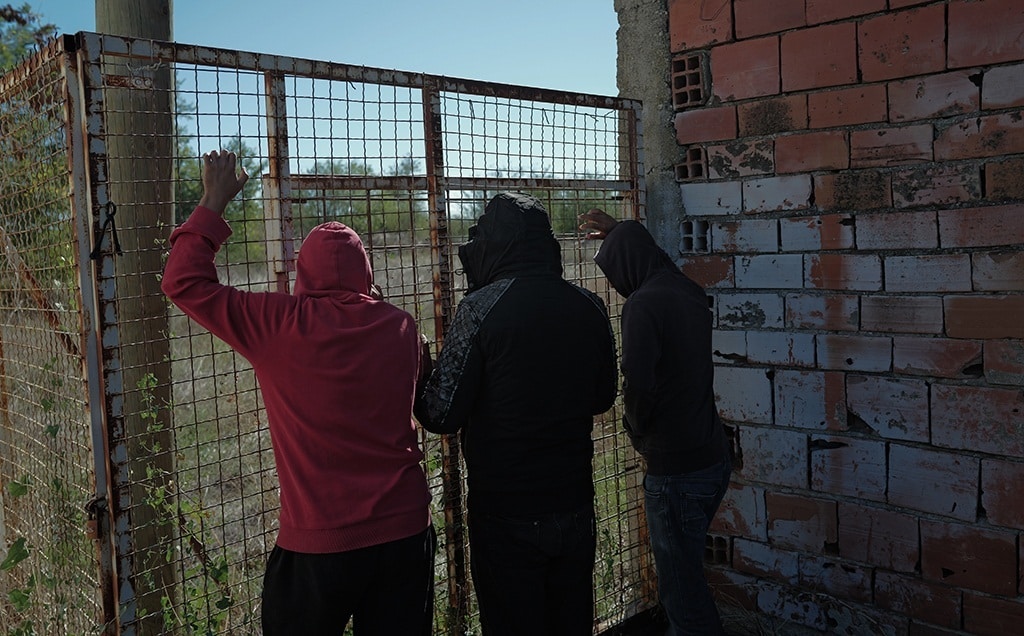
Sexually exploited or forced into labour, crime, begging or marriage. Every year, tens of thousands of men, women and children are coerced or tricked into these abuses and more, with vulnerable people, including children, the poor and refugees, often hardest hit. INTERPOL Spotlight focuses on the fight against a form of organized crime built around disregard for human safety and dignity.
Fueled by poverty, conflict or climate change and driven by organized crime groups’ endless appetite for profits, human trafficking affects all regions of the world. After a significant drop in 2020, by 2023 the United Nations Office on Drugs and Crime reported that numbers worldwide had surged back to above pre-pandemic levels, with traffickers mainly targeting women and children, who together make up three quarters of their total recorded victims. Children alone account for 38 per cent. “We also know that human trafficking disproportionately affects the poor, migrants, refugees and other stateless persons,” says Ofelia Hough, Criminal Intelligence Officer with INTERPOL’s Vulnerable Communities unit. “Many of them may have already been displaced and are desperate for work or shelter, making them an easy target for traffickers.”
Psychological and physical harm
Once they have been trapped, victims are often moved across borders and held in what look like ordinary homes or forced to work in apparently legitimate businesses, on or offline. They may be passed on or sold to other criminal groups and some end up being held in a coercive situation for most or all of their lives. “The covert nature of human trafficking, with victims often hiding in plain sight makes it difficult to trace them and identify them as victims,” Ofelia Hough continues. “Many suffer psychological as well as physical harm and are reticent to engage with police when we do trace them, making the crimes difficult to investigate and bring to justice.”
A global network of partners and policing tools
INTERPOL’s specialist Human Trafficking and Migrant Smuggling team are dedicated to breaking this cycle of enslavement or coercive control wherever it is perpetrated. They work closely with colleagues in INTERPOL’s 196 member countries, as well as major global and regional partners such as the International Organization for Migration, the United Nations Office on Drugs and Crime, Europol, Afripol and Frontex, and dozens of grassroots NGOs. Our secure communications systems can send data on traffickers, victims, new trafficking routes and more to all or selected member countries, including via our colour Notices. “These are widely recognized and acted on by law enforcement agencies around the world and play a major role in human trafficking investigations,” says Ofelia Hough. “Blue Notices are very important in gathering intelligence on suspects and their movements, while Yellow Notices help us send out alerts about missing persons, Red Notices can lead to the arrest of named suspects and Silver Notices help trace the illegal profits that are the criminals’ main motivation.”
Alerting on the emergence of scam centres
But it was a Purple Notice – warning of a new criminal modus operandi – and later an Orange Notice – warning of a serious threat to human safety – that made INTERPOL the first organisation to alert the world to the rise and then the globalization of scam centres, the setting for an emerging, growing and shocking form of human trafficking.In March 2022, during an INTERPOL-coordinated operation in South East Asia, officers began to receive reports that nationals of several countries in the region were being lured by fake job advertisements to scam centres in Cambodia. On arrival, instead of starting the promised job, they were forced to hand over their passports, locked up and made to send numerous online scam messages to potential victims or face punishment. By June 2022, INTERPOL had enough information to send out a Purple Notice detailing this new criminal method and in October 2022 published a first report on the phenomenon, drafted by Criminal Intelligence Analyst, Stephanie Baroud. “When I started delving deeper, I began to see that this was becoming a truly global issue,” she explains. “Victims were being tricked into travelling to scam centres in South East Asia from as far away as South America, Western Europe and Eastern Africa and we were also seeing cases of people being held in West Africa, as well as on a smaller scale in several European countries.”
This is an excerpt of INTERPOL’s Spotlight piece, to read in it’s entirety, click here
For more INTERPOL news, click here