Denrich Sananda, Senior Consultant, Arista Cyber, discusses the link between food safety and cyber resilience and argues that both are equally important in the digital age.
“Physical hygiene goes hand-in-glove with food safety, but as the global food chain becomes increasingly digitised, the issue of cyber hygiene has earned equal attention.
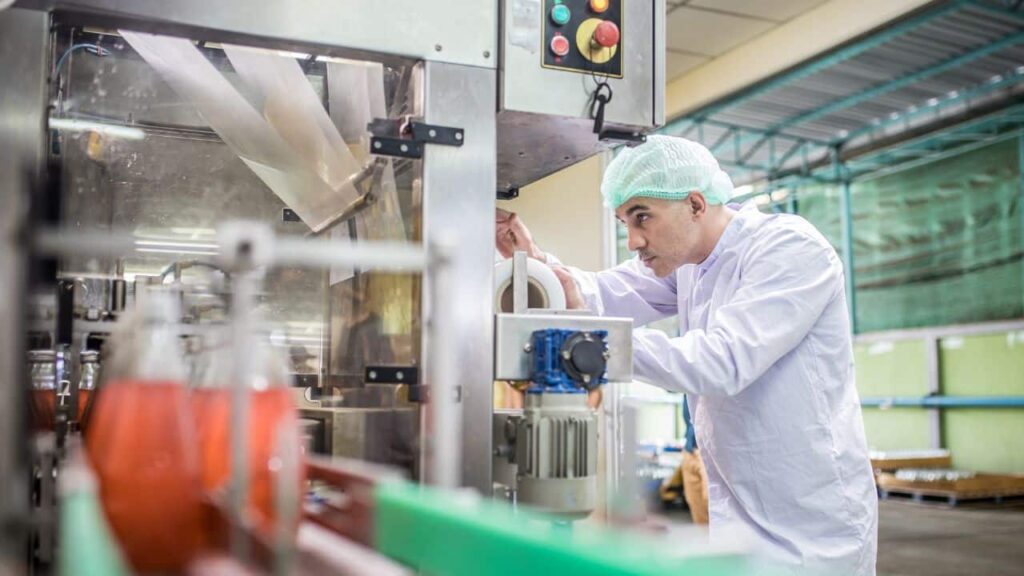
“From smart sensors on production lines to cloud-based quality assurance systems, digital transformation weaves connected technology directly into every stage of food manufacturing.
“These upgrades have made the food industry more agile and efficient, but that integration and reliance introduces additional risk. The truth is, food safety now depends not only on clean hands and equipment, but on secure networks, protected data, and resilient operational technology (OT). Critical control points (CCPs) are central to mitigating food safety hazards; a cyberattack which tampers with these would be disastrous.
The open door of CCPs
“Imagine an attacker that has snooped around a network and found a temperature control system. A small, unnoticed change to cooking or pasteurisation settings might be all that’s required for unsafe food to reach the supply chain, and a massive regulatory breach to hit the affected producer.
“Then consider the impact of a disabled metal detector, a pH regulator offering incorrect readings, false negatives on ingredient tests – CCPs are a tempting target, particularly as businesses come to rely on centralised, remotely-accessible control systems.
“There’s a new reliance on data, too, as producers struggle to keep pace with regulatory change. Compromised or encrypted traceability systems might corrupt lot codes or supplier data, hindering recall accuracy or leading to unmarked allergens making it into products.
“Network disruptions could halt production line monitoring, leaving operators blind to deviations that would normally trigger corrective action. The convergence of IT and OT has created new pathways for cyberattacks that threaten to directly impact production safety and business continuity.
Breaching the cyber frontier
“A recent cybersecurity assessment at a major food manufacturing facility revealed just how significant this risk can be. The review uncovered multiple critical vulnerabilities in the plant’s OT environment, including outdated firmware on industrial controllers, unsecured remote access systems, and weak segmentation between corporate and production networks.
“In practical terms, these weaknesses mean that a cyber intruder can theoretically stage an attack from anywhere, infiltrating one machine and moving laterally across the network to affect any and all systems, including those within the production environment. While the facility followed professional advice and quickly moved to remediate these issues, its case is far from unique, and the threat doesn’t always stop at the theory stage.
When ransomware meets food safety
“The food sector is now fully part of the critical infrastructure landscape. Attackers understand the leverage they gain by disrupting supply chains that consumers rely on daily.
“Food and beverage companies, especially large multi-site producers, are increasingly targeted because downtime directly affects revenue and erodes customer trust.
“In October 2025, in a highly reported incident, beverage giant Asahi suffered a major cyberattack that forced several of its Asia-Pacific production sites offline for days, disrupting its ordering, shipping, and customer service functions.
“The attack’s impact was far-reaching: stock shortages affected major retailers and restaurants, and it fell during the run-up to the Japanese gift-giving season, offering rivals a market advantage so significant that Asahi was forced to delay the announcement of its Q3 results.
“Earlier in 2025, United Natural Foods Inc. (UNFI) in the U.S. was hit, disrupting deliveries to supermarkets and distribution partners across multiple states; in 2022, global meat processor JBS faced a livestock backlog and silent production lines across the world after a ransomware attack brought down critical systems. Any cyberattack is an operational crisis; an attack which stops the flow of business doubly so.
The danger of quiet infiltration
“Not all cyber incidents are loud – and they do not even require technical knowledge. Intent can be enough: Asahi’s attack was conducted by a known ransomware-as-a-service group, essentially offering its cybercrime expertise up to the highest bidder.
“If that bidder happens to know just the thing to ruin a rival’s reputation, a little silent tampering may be all it takes to put a producer out of business.
“In reality, many such threats go unnoticed because they create data gaps rather than dramatic operational failures. A system that silently stops recording, or logs that appear intact but are untrustworthy, can be more dangerous than an obvious outage.
“Quiet failures undermine the verification steps that inspectors, auditors, and regulators depend on. The result is a growing blind spot: food-safety processes have become more digital, but not necessarily more resilient.
Refactoring safety attitudes
“Modern food safety systems are guided by frameworks such as HARPC and the Food Safety Modernisation Act. These rely on continuous monitoring, data logging, and traceability – metrics which depend on sensors, programmable logic controllers and digital reporting tools, all of which are potential cyber targets.
“Combatting these risks requires a cultural shift, which begins with acceptance that cybersecurity is a shared responsibility.
“Resilience should be cross-functional, involving quality assurance, engineering, production, and IT teams alike. Spotting potential risks demands education and continuous vigilance; stopping them requires joined-up thinking, considering not only the systems at risk but the way they interact up and down the chain.
“Routine verification is vital. Just as hygiene audits ensure physical safety, regular cybersecurity assessments should test network segmentation, access controls, and incident readiness.
“Hazard analysis and preventive control plans have traditionally focused on physical and biological risks like cross-contamination, temperature abuse, pathogens, or foreign objects.
“Yet most of these controls now rely on digital infrastructure, so hazard analysis of cyber threats must be written directly into food safety programmes and incorporated into all preventative controls. Like food safety, cyber safety must be addressed proactively, not reactively.
Healthy production through cybersecurity
“Producers that embed cyber resilience into food safety culture will be those best positioned to protect their products, their customers, and their reputation long into the future.
“Those that delay risk discovering too late that their biggest vulnerability wasn’t on the production line, the supply chain, or the ingredients, but deep within their digital backbone.
“The food chain is only as strong as its weakest link. In a world where threats evolve as rapidly as technology itself, safety demands robust cyber hygiene. It is as essential to modern food production as stainless steel and sanitation schedules.”
To read more security news, click here.