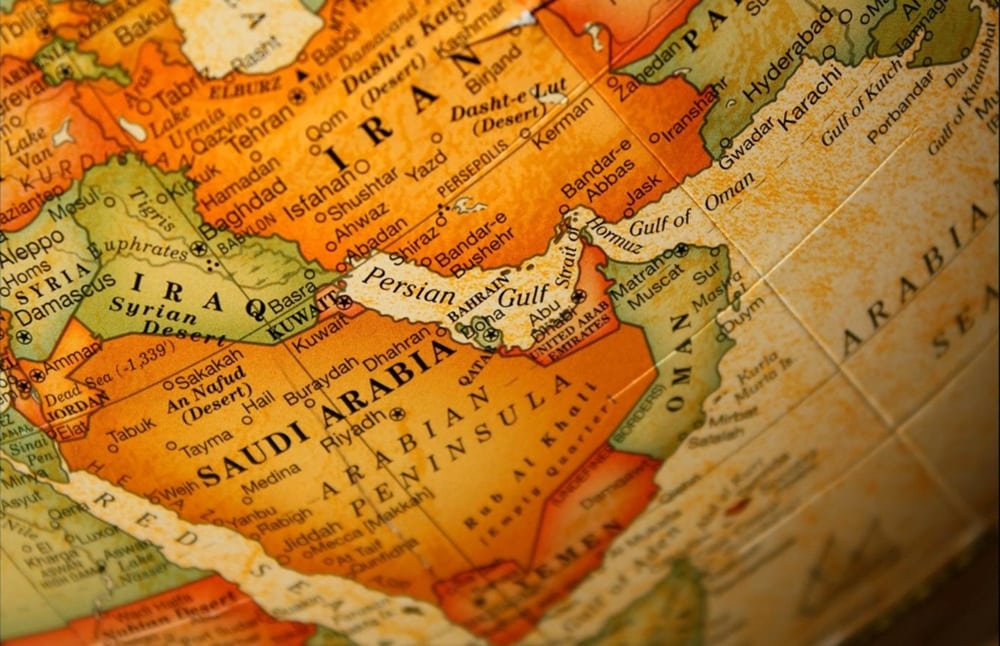
With the US-Iran Memorandum of Understanding expected to be signed in Geneva tomorrow, Geopolitical intelligence risk advisory firm Global Situational Awareness has prepared a GCC Alert on what this may mean for the Gulf, shipping, energy markets and regional security. The agreement may create a pathway to reopening the Strait of Hormuz, but it should not yet be treated as a return to normal conditions. Key nuclear, maritime and regional security questions remain unresolved, and businesses should continue to monitor how the agreement is implemented in practice.
The reported US-Iran Memorandum of Understanding should be treated as a transitional crisis-management framework rather than a completed nuclear agreement. Its immediate purpose appears to be to stop the current escalation cycle, reopen the Strait of Hormuz, allow vessels to begin moving, and create a 60-day negotiating window for the unresolved nuclear file.
The direction of flow is significant. Maritime access, oil and fuel exports, sanctions waivers, and limited economic relief appear to begin before the most difficult nuclear issues are settled. Highly enriched uranium, enrichment limits, inspections, stockpile disposition, and enforcement are expected to be addressed during the 60-day negotiation period.
This creates an important distinction. The MoU may reduce immediate energy and maritime pressure, but it does not yet answer the strategic questions that drove the crisis. It does not yet provide a JCPOA-style technical framework. It does not yet resolve Iran’s proxy networks. It does not bind Israel in a durable way. It does not guarantee Houthi restraint in the Red Sea. It does not yet confirm whether Hormuz will return to normal commercial conditions.
Early maritime behaviour indicates that the agreement is already influencing operator decisions. Some tankers are repositioning toward the Gulf in anticipation of renewed oil flows, while major carriers continue to maintain restrictions, surcharges, and selective booking controls across parts of the Gulf. This suggests that Hormuz may reopen first as an energy corridor, rather than as a fully normalised commercial waterway.
The legal and operational basis of reopening also matters. Hormuz is a natural international strait used for international navigation. It is not a canal-style toll corridor. A genuine reopening requires free, safe, and non-discriminatory transit through the recognised Traffic Separation Scheme, without political clearance, arbitrary inspection, or coercive fees.
Trump’s potential strategy
Trump’s current strategy appears to combine de-escalation, economic leverage, and political sequencing. Rather than resolving the nuclear issue first, Washington appears to be prioritising the reopening of Hormuz, the movement of ships, and a reduction in immediate market pressure.
This gives the administration a visible de-escalation outcome. It can point to a reopening maritime corridor, lower energy pressure, and a diplomatic process with Iran, while avoiding a prolonged blockade or further direct military escalation in the Gulf.
At the same time, the approach preserves leverage. The larger economic package, including the reported reconstruction and development mechanism, appears conditional rather than immediate. This allows Washington to frame the arrangement as a path to compliance rather than an unconditional concession.
The risk is that economic and maritime relief may move faster than nuclear verification. If Iran receives early access to oil revenue, fuel exports, or financial channels before the HEU issue is resolved, critics will argue that Tehran has gained relief without making irreversible nuclear concessions.
The strategy may therefore work as a short-term crisis off-ramp, but it depends heavily on what happens during the 60-day negotiation period. If those talks produce enforceable nuclear limits, credible HEU disposition, and robust inspections, the MoU could become the basis for a more durable agreement. If they do not, the arrangement may be remembered as a temporary reopening of Hormuz that left the core threat architecture intact.
Download the full report, here
For more Middle East news, click here