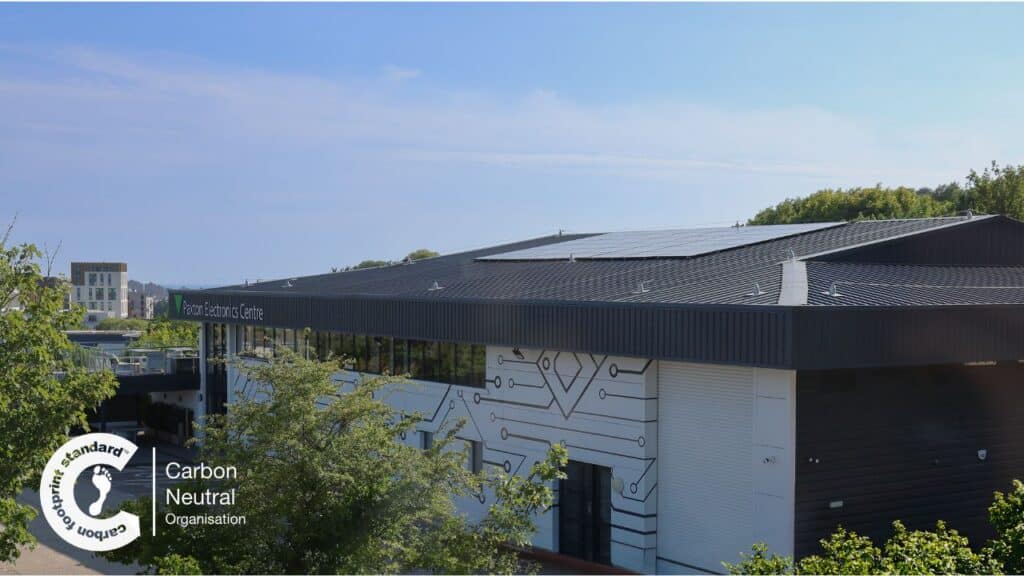
Paxton has continued to reduce its carbon emissions while remaining carbon neutral across the UK, France, Germany and South Africa, according to its latest Carbon Footprint Report.
Since establishing its 2022 baseline, Paxton has reduced its market-based carbon emissions by 41%, including a further 4.4% reduction during 2024. This marks the third consecutive year that Paxton has maintained its carbon neutral status across these markets, with the latest results highlighting the impact of practical changes being made across the business to reduce emissions.
Katie Millis, Divisional Director of Communications, and Green Team Lead at Paxton, said: “We are really pleased with the progress that we have made. Reducing our carbon emissions by a further 4.4% while maintaining our carbon neutral status shows that the decisions we’re making across the business are having a real impact.
“From the way we manufacture and transport our products to how we run our buildings; we’re continually looking for ways to reduce our environmental footprint.”
A key driver behind Paxton’s 2024 reductions was the continued transition from air freight to sea freight. The report highlights that freight emissions have reduced by 61% over the last two reporting periods, largely due to a 66% reduction in air freight emissions.
Speaking about the changes, Katie said: “One of the biggest successes so far has been our continued shift from air freight to sea freight. It’s a practical change that’s delivering significant reductions in emissions while supporting the long-term resilience of our global supply chain. It demonstrates that sustainability and good business can go hand in hand.”
Paxton has also taken steps to reduce emissions from its energy use. All the company’s UK sites are supplied through 100% renewable energy tariffs, resulting in zero market-based emissions from purchased electricity.
As part of its carbon neutral commitment, Paxton supports independently verified carbon reduction projects that deliver environmental and social benefits around the world.
These include the Zhangye Improved Grassland Management Project in China, which restores degraded grasslands to improve biodiversity and increase carbon sequestration; the Afforestation of Degraded Grasslands in Vichada, Colombia, which establishes native forests to restore ecosystems and remove carbon from the atmosphere; and the Zambia Western Province Safe Water Project, which provides communities with access to safe drinking water while reducing greenhouse gas emissions and improving health and wellbeing.
On the importance of supporting carbon reduction projects, Katie said: “Reducing Paxton’s emissions remains our priority, and we’re proud of the progress we’ve made. Supporting independently verified carbon reduction projects allows us to address the emissions we cannot yet eliminate, while contributing to projects that deliver wider environmental and social benefits.”
Looking ahead, the company remains focused on reducing its carbon footprint, with a forecasted target to achieve a 94.1% reduction in absolute market-based emissions by 2041. This is nine years ahead of the 2050 net zero emissions milestone established through the UK’s Climate Change Act 2008.
In a 2024 Paxton installer survey, 77% of respondents agreed that Paxton is doing enough to protect the environment. This feedback reflects the importance of continued action, with Paxton remaining focused on reducing the environmental impact of its products and operations while maintaining the quality, reliability and service customers and partners expect.
You can read more about Paxton environmental policy on their website
To read more Paxton news, click here.