As fly-tipping continues to dominate headlines, the focus is moving beyond reporting towards prevention — particularly on remote land where the impact is often greatest, but Reconeyez says that improving visibility in these locations doesn’t require heavy infrastructure or constant human presence. With autonomous, AI-driven monitoring, organisations can gain timely insight into activity, reduce repeat incidents, and support enforcement efforts more effectively.
Fly-tipping or illegal dumping continues to rise internationally, with rural roads and remote land disproportionately affected.
- England: Over 1.15 million incidents recorded in the past year alone
- Ireland: Illegal dumping cost Dublin City Council €5.2 million in 2024
- France: Police report a 15% increase in fly-tipping incidents since 2020
Fly-tipping is damaging for landowners, local communities, and the environment. It is expensive to clear up and difficult to prevent and prosecute.
These incidents are not random. Sites are deliberately chosen because they’re hard to monitor — unlit access routes, isolated tracks, farmland, utility land, and locations without fixed power or connectivity.
As ongoing media coverage shows, fly-tipping is not a minor nuisance; it’s a persistent and costly problem. Despite many countries implementing higher fines, the issue continues to grow, as a result governments and landowners are looking for new solutions.
The visibility gap behind the numbers
Enforcement spending continues to rise, yet only a small percentage of fly-tipping incidents ever result in identification or action. The challenge isn’t a lack of effort; it’s a lack of visibility.
For councils, landowners, and security teams, problems often develop between site visits. Activity happens at night or outside normal working hours, and by the time fly-tipping is discovered, the evidence needed to support enforcement is often gone.
This visibility gap is especially pronounced on sites with:
- No lighting
- No power or connectivity
- Limited day-to-day presence
Traditional CCTV and fixed infrastructure can struggle in these environments, both operationally and economically.
Why remote land needs better visibility
Fly-tipping incidents continue to increase across England’s rural and unlit areas – The data tells a clear story: fly-tipping incidents continue to increase, with rural and unlit areas disproportionately affected. Tackling this trend requires a shift from reactive clean-up to proactive awareness.
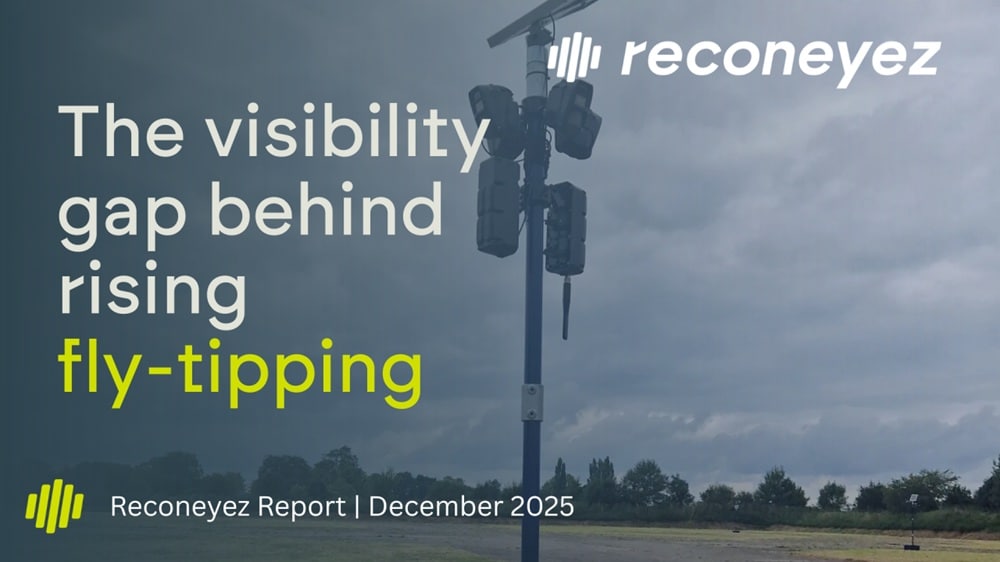
In recent deployments, organisations have been improving visibility on remote land by using autonomous, low-maintenance monitoring designed specifically for these conditions.
This approach typically includes:
- Solar-powered devices that remain online long-term
- AI-verified detection focused on real activity, not background noise
- High-quality images to support identification and enforcement
- Elevated mounting to widen coverage and reduce tampering
- Cloud-based updates to minimise maintenance and site visits
The goal isn’t constant surveillance — it’s knowing when something actually happens, even in locations that are rarely visited.
By deploying autonomous, AI-driven monitoring, security providers can deliver continuous coverage without increasing man hours or installing infrastructure. The result is better visibility, more substantial evidence, and earlier intervention, all without increasing operational complexity.
Explore how illegal dumping surveillance works in practice
Case study:
- Ward addresses a persistent fly-tipping hotspot
- Ward Security partnered with a local authority facing repeated fly-tipping incidents in a hard-to-monitor location. The site had become costly and resource-intensive to manage, with limited success using traditional methods.
By deploying Reconeyez’ autonomous detection technology, Ward transformed the area into a monitored, low-maintenance environment. Elevated detectors, wireless connectivity, and night-time visual verification enabled clear insight into vehicle access and activity — without the need for fixed infrastructure.
Supported by Ward’s National Operations Centre, the solution delivered:
- AI-verified alerts with fewer false alarms
- Reduced site visits and operational overhead
- Earlier intervention to deter repeat incidents
- Clear visual evidence of fly-tipping activity to support enforcement
This shift allowed the client to move from repeated clean-ups to a more proactive, cost-effective approach to prevention.
Looking to protect remote or vulnerable sites?
In a competitive market, the ability to protect difficult sites sets you apart.
Discover how Reconeyez helps security providers deliver effective fly-tipping prevention and monitoring — streamlining operations while providing a practical way to deter activity and gather actionable, court-ready evidence.
Partner with Reconeyez to strengthen your offering and help your clients move from reactive clean-up to proactive prevention.
Get in touch with Reconeyez today to discuss your project and book a demo.
For more Reconeyez news, click here