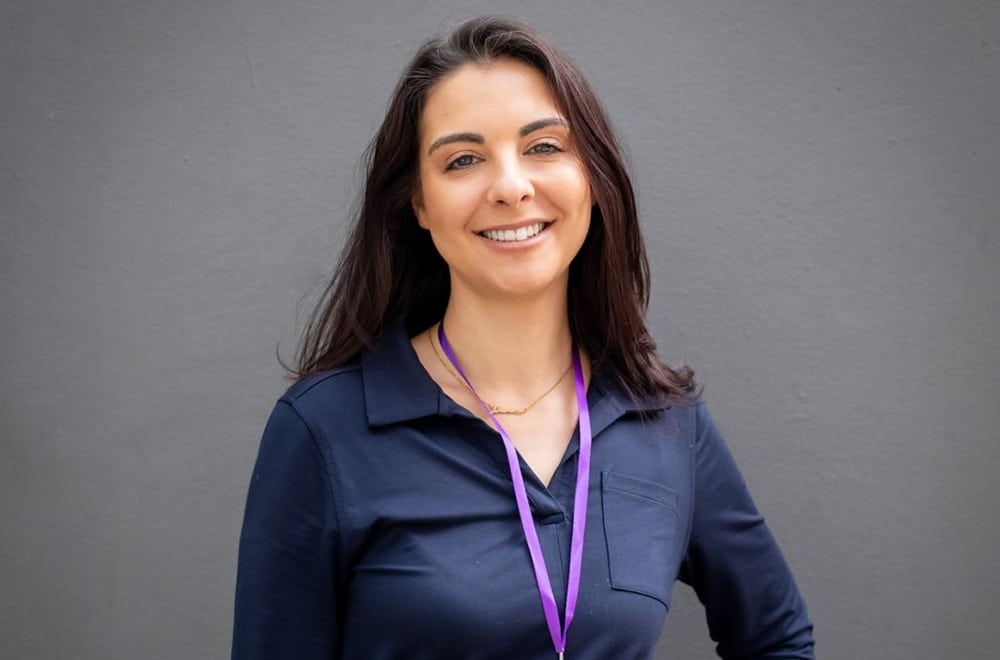
In this special blog, Natacha Torres, Director of Marketing Communications, Mature Markets, HID, gives her thoughts on being promoted to Director, leading across Europe and APAC, and what this vantage point reveals about the industry’s most persistent — and most solvable — talent gap.
Having spent a decade in the B2B tech world before moving into security, I’m no stranger to male-dominated industries. I’ve been used to walking into meetings and being one of the few women in the room — sometimes the only one. But stepping into a global leadership role across Europe and APAC made something even clearer: despite the progress we celebrate, many of the rooms that shape our industry’s future are still not reflective of the world we’re protecting.
That perspective, shaped by two industries where women remain underrepresented, has given me a sharper view of both the problem and the opportunity we have in front of us. The business case for closing this gap is not only compelling, it’s urgent.
What the Workforce Gap Looks Like From Here
The security industry has a well-documented talent shortage. The 2026 Security Megatrends report from the Security Industry Association makes the link clear: the sector cannot position itself as high-value without first attracting a deeper, broader talent pool. When I look at the hiring pipeline across my markets, the gap is visible and consistent. Qualified candidates are scarce. Female candidates are scarcer still.
This is not a problem unique to security, but our industry has been slow to address it, perhaps because the career pathway into security is not obvious from the outside. Many people arrive laterally from tech, IT, engineering, which themselves sit within STEM, an area that has also historically been male‑dominated. As an industry, we need to demystify these pathways and make security feel accessible and relevant much earlier.
Because if we want a stronger, more innovative workforce, we need a broader range of experiences and perspectives reaching the field, and we must be intentional about who feels invited to be part of it.
Reading the Room, Across Every Room
One thing working across multiple geographies has taught me is that the conversation about women in professional leadership is not the same everywhere. It plays out differently in Paris than in Hong Kong, in Lisbon than in Sydney. Cultural context shapes how women present themselves in the workplace, how career progression is defined and discussed, and what entry points into an industry like security actually look like in a given market.
That is not a problem to be solved with a single global programme. It is a reminder that building a more balanced workforce requires cultural intelligence, not just good intentions. The organisations making progress are the ones that take the time to listen before they act, adapt their approach to local nuance and resist the instinct to export a template.
What holds across every market is the outcome: when women are in the room, they contribute. The conditions that get them there and keep them there will look different depending on where you are.
The Seat Was Always Ours
From where I sit now, having worked across many of those markets, the talent gap is not a theoretical problem. Recent [NT1.1]data reinforces why this work matters. According to the World Economic Forum’s Global Gender Gap Report (2024), women represent 42% of the global workforce; fewer than 25% of C‑suite roles are held by women; and it will take (an average of) 134 years before we reach full parity.
Closing this gap requires deliberate decisions at every level: in hiring, in leadership, and in the daily management choices that rarely make it into any strategy document.
When I look at my own journey, I’m acutely aware that while I’ve worked incredibly hard to be where I am, hard work alone isn’t always enough. I’ve been fortunate to have people who supported me, challenged me, advocated for me and encouraged me to take up space in rooms where a difference in opinion is needed. Their belief in me has made a difference — and I don’t take that for granted.
What Needs to Happen Next
The organisations winning on talent in this sector are not doing anything complicated. They are exploring different ways to attract young (or new) people. They are building internal community infrastructure — employee resource groups, women’s initiative networks, mentorship programmes, cross-company forums such as SIA’s LeadHER events — and making sure people know those resources exist.
At the management level, these winning organizations are doing the basic things consistently: noticing whose ideas land in meetings, providing stretch opportunities equitably, and building flexible and adaptable workplaces that allows working parents to thrive without having to choose between their career and their family.
The seat was always ours. The industry just did not always act like it. In 2026, with a talent gap that is only widening and a technology transformation that demands new kinds of thinking, failing to invest in women at every level of the organisation is has a cost. And that cost is becoming visible.
The rest will keep building homogeneous teams and wondering why their thinking isn’t moving fast enough.
About the Author
Natacha Torres is Director of Marketing Communications for Mature Markets at HID, leading PR and external communications strategy across Europe and APAC. She is a contributing voice on identity management, workforce development, and the evolving security landscape. This article builds on her previous published work, “Women in Security: Building a Future of Opportunity,” featured in Benchmark.
For more HID news, click here