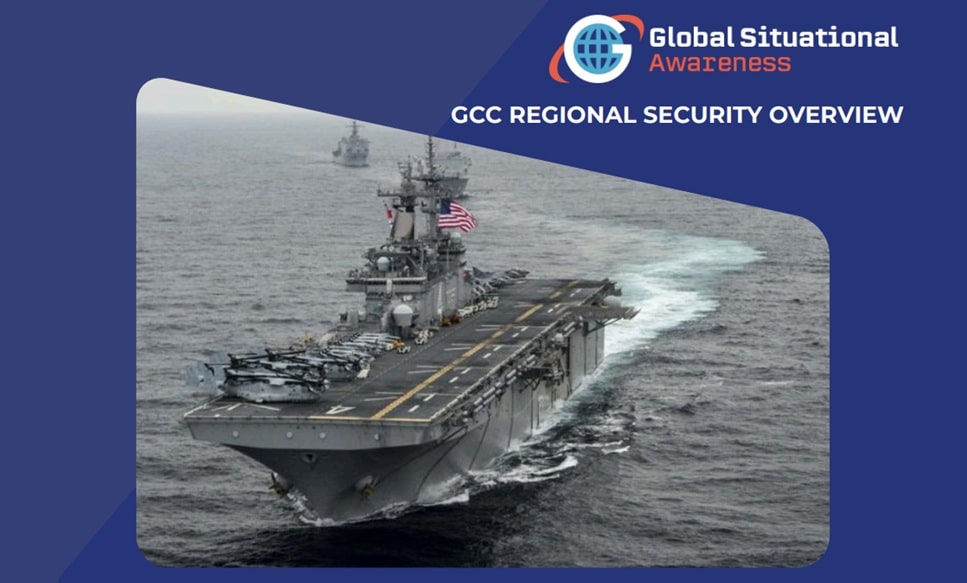
Leading global risk management firm, Global Situational Awareness has released an in-depth, comprehensive overview into the US and Israeli strikes against Iran. The piece discusses the impact on the different parts of the Middle East region, particularly as Iran retaliates, striking US military bases in the UAE, Bahrain and elsewhere. All this and much more.
Key Assessments
The regional security environment has entered a period of sustained escalation following coordinated US and Israeli strikes against Iranian leadership and military infrastructure. Iran’s response through missile and drone attacks across Israel and multiple Gulf states demonstrates a strategy aimed less at direct battlefield advantage and more at expanding the geographic scope of the conflict.
Despite the deaths of several senior Iranian leaders, including the Supreme Leader, the probability of immediate regime collapse remains low. The political architecture of the Islamic Republic is structured for institutional continuity through the clerical establishment and the Islamic Revolutionary Guard Corps (IRGC), and replacement appointments have already begun to stabilise command structures.
Iran’s strikes affecting Gulf states appear designed to increase political pressure on governments aligned with the United States while simultaneously widening the conflict environment through horizontal escalation.
Aviation disruption across the Middle East remains severe due to widespread airspace closures and flight rerouting, while maritime risk in the Gulf has increased significantly following Iranian signalling regarding the Strait of Hormuz
Executive Overview
The regional security environment escalated sharply following coordinated strikes targeting Iranian leadership compounds, military infrastructure and strategic facilities. Iran responded with missile and drone attacks affecting Israel and several Gulf states, triggering extensive air defence activity across the region.
Although interception rates remain high, falling debris and isolated impacts have caused casualties and infrastructure damage in several locations. The escalation has also generated significant disruption across global aviation networks and heightened maritime security concerns along critical shipping corridors in the Gulf.
Iran
Iran confirmed the death of Supreme Leader Ayatollah Ali Khamenei along with multiple senior regime officials during the opening phase of the strikes. A forty‐day national mourning period has been declared as authorities attempt to stabilise the political environment.
One of the deadliest incidents occurred in Minab in Hormozgan Province, where an airstrike struck the Shajareh‐Tayebeh girls’ elementary school. Casualty estimates indicate between 108 and 148 fatalities, primarily schoolgirls and staff, with approximately ninety‐five additional injuries reported. Across Iran more broadly, the Iranian Red Crescent has reported more than two hundred fatalities nationwide with several hundred injured during the first day of strikes.
Additional senior figures reportedly killed include Mohammad Pakpour, commander of the IRGC; Abdolrahim Mousavi, chief of staff of the armed forces; Aziz Nasirzadeh, minister of defence; and Ali Shamkhani, senior national security adviser. Initial reporting suggests approximately forty senior officials were killed during the initial strike wave.
Despite these losses, immediate regime collapse remains unlikely. Iran’s political system is structured around institutional resilience linking clerical authority, military command and security institutions. Replacement officials have already begun to be announced as authorities seek to restore continuity of command.
United Arab Emirates
The United Arab Emirates experienced extensive air defence activity during Iranian retaliation. Authorities reported the interception of approximately 137 missiles and more than 200 drones, with several interceptions resulting in collateral damage from falling debris.
Debris from interception activity sparked a fire at Jebel Ali Port, injuring four people. In Abu Dhabi, debris from intercepted missiles was reported in several districts including Saadiyat Island, Khalifa City, Mohammed bin Zayed City, Bani Yas and Al Falah. Most reported damage was caused by interception debris rather than direct missile impacts.
Qatar
Explosions were reported across Doha following missile interceptions. Debris from intercepted projectiles caused a small fire in an industrial area though no injuries were confirmed.
Bahrain
Missile and drone activity reportedly affected areas of Manama, including impacts near the Crowne Plaza and Bay View Tower. Bahrain remains strategically exposed due to the presence of US Fifth Fleet naval facilities.
Kuwait
A drone strike hit Kuwait International Airport, damaging infrastructure near Terminal One and injuring airport personnel. Air raid sirens were activated across the country as air defence systems intercepted additional projectiles.
Saudi Arabia
Saudi Arabia remains on heightened alert as Iranian retaliation continues across the region. Strategic exposure is particularly high in the Jizan region near the Yemen border which hosts major energy infrastructure including the Saudi Aramco Jazan refinery complex with an estimated capacity of approximately 400,000 barrels per day. At the time of reporting there has been no confirmed damage to Saudi oil or gas infrastructure.
Aviation and Airspace Situation
Aviation disruption across the Middle East remains severe as multiple countries implemented airspace closures or restrictions during the escalation. Cirium aviation data indicates that 716 flights were cancelled during the initial disruption window out of more than 4,000 scheduled services to the region.
When outbound services are included, more than 1,800 regional flights were cancelled during the early phase of the crisis. Global aviation monitoring services reported more than 19,000 flight delays worldwide as airlines rerouted aircraft around restricted airspace corridors.
Maritime Security Environment
Maritime risk across the Gulf has increased significantly following Iranian signalling regarding the Strait of Hormuz. Ships operating near the waterway reported radio transmissions attributed to Iran’s Revolutionary Guards warning that vessels were not permitted to transit the strait.
The US Navy has indicated that it cannot guarantee protection for all commercial vessels operating in the Gulf simultaneously. A separate maritime incident near the Musandam Peninsula involved an oil tanker being struck, injuring crew members.
Outlook
The conflict is likely to continue through missile exchanges, targeted strikes and proxy activity rather than large‐scale conventional warfare. Iran’s immediate priority will be restoring leadership continuity while sustaining retaliatory capability through missile launches, drone attacks and maritime signalling.
For Gulf states the most immediate risks remain continued air defence engagements, aviation disruption across regional hubs and heightened maritime security risks near the Strait of Hormuz.
To find out how Global Situational Awareness can help your organisation identity, assess and manage geopolitical and security risks, please email gsoc@global-sa.co.uk
Download the GCC regional briefing, below.
For more news on global risk, click here