TAQA’s Hesham ElGindy will explore responsible AI, insider risk and integrated security strategies at Intersec Saudi Arabia‘s Future Security Summit.
Digital transformation and the rapid adoption of artificial intelligence across the Middle East are reshaping how organisations approach the protection of people, infrastructure and operations, with cyber, physical, operational, human and third-party risks now increasingly interconnected.
Against this backdrop, Intersec Saudi Arabia 2026 will examine how this integration is changing the way organisations approach risk management, with greater emphasis on integrated governance, responsible AI, and stronger oversight of insider threats as part of the Future Security Summit.
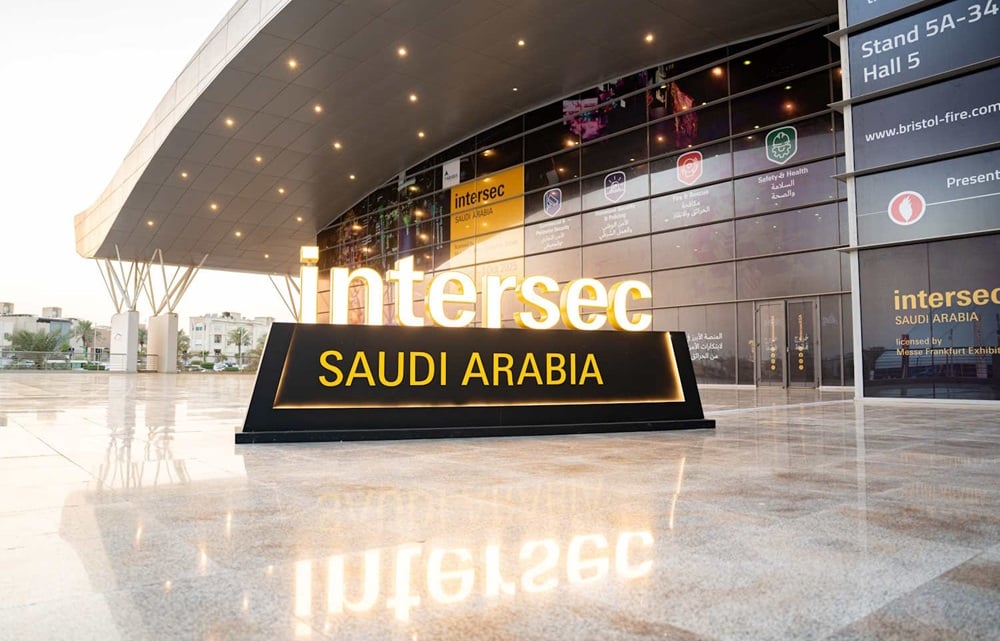
Taking place during Intersec Saudi Arabia 2026 from 16–18 November at the Riyadh Front Exhibition & Conference Center (RFECC), the CPD-certified Summit will bring together policymakers, government representatives, infrastructure operators and security professionals to examine the technologies, leadership strategies and governance models supporting safer, more secure organisations across Saudi Arabia and the wider region.
Incorporating case studies and emerging approaches to managing today’s evolving security landscape, the conference programme is expected to welcome more than 110 expert speakers, including Hesham ElGindy, Group Vice President – Governance, Risk & Compliance at TAQA, who will draw on his extensive experience in the energy and industrial services sectors.
As part of the Summit, he will lead a fireside chat titled Trust, Access, and Risk: Rethinking Insider Threats Today, exploring how organisations can better manage insider risk through trust, behaviour and access, while building an organisational culture that can identify risks early without undermining trust.
According to ElGindy, organisations need to move beyond treating cyber and physical security as separate disciplines if they are to keep pace with today’s increasingly complex threat landscape.
“Threats no longer operate within separate boundaries. Companies need integrated governance, intelligence, risk management and response capabilities. The greatest opportunity is to embed security into transformation programmes from the outset, rather than introducing controls after projects have already been designed or launched,” said ElGindy.
The security expert also believes artificial intelligence and predictive analytics will play an increasingly important role in helping organisations identify emerging threats, detect unusual behaviour and improve decision-making. However, he stresses that clear accountability, strong governance, high-quality data, privacy protection and continued human oversight must underpin these technologies.
For Saudi Arabia, these considerations are becoming increasingly important as the Kingdom develops a new generation of giga-projects, airports, tourism destinations, critical infrastructure and smart cities. ElGindy believes the scale and ambition of this development creates an opportunity for the country to establish new benchmarks by integrating security, resilience and public safety from the design and planning stages.
“The future of security lies in integrated models that connect people, processes, technology, governance and organisational culture. Organisations that combine advanced technology with trusted leadership, clear accountability and a culture where security is everyone’s responsibility will be best placed to manage tomorrow’s risks,” he added.
These themes will be explored alongside a comprehensive conference programme featuring sessions on Navigating Uncertainty: The Future of Security in a Changing World, The AI Playbook: Winning the Decade, Not the Dem, Applying AI: Reshaping Detection, Response, and Responsibility, and Human Judgment in the Age of AI,amongst others.
The programme features leading experts from organisations including AFC Asian Cup Saudi 2027, Netflix, Bechtel Australia, Riyad Bank, the Ministry of Municipalities and Housing, the International Civil Aviation Organization, and the General Authority of Civil Aviation (GACA).
Riham Sedik, Exhibition Director, Intersec Saudi Arabia, said: “Saudi Arabia’s pace of development is creating new opportunities, but it is also changing how organisations think about security. As major projects become more connected and technology plays a greater role in day-to-day operations, there is growing demand for practical strategies that bring together governance, technology and operational expertise.
“The Future Security Summit is designed to give industry leaders practical insights, meaningful discussion and new perspectives on today’s evolving security challenges.”
The Future Security Summit takes place alongside the Fire Protection & Technology Summit. Together, they provide a platform for those within the respective industries to explore practical approaches to security, safety and resilience as Saudi Arabia continues to deliver the infrastructure, cities and major projects underpinning its Vision 2030 ambitions.
In addition to the conference programme, Intersec Saudi Arabia 2026 is expected to welcome more than 25,000 visitors and over 500 exhibitors from more than 40 countries. For more information, please visit Intersec Saudi Arabia’s website
To read more Intersec Saudi Arabia news, click here.